

A short primer on CEPs for the benefit of you and me
Originally posted on Weekly Brand Strategist. Thanks Alex!
One skill to learn
Category Entry Points (CEPs) are the types of mental associations you want your audience to make when they get exposed to your brand communications, content or experience. They’re a concept created by Dr Jenni Romaniuk and first discussed in her book Building Distinctive Brand Assets (2018), as a build on the idea of “mental availability”. In summary, if mental availability is what your brand needs to have, CEPs are part of how you can build it.
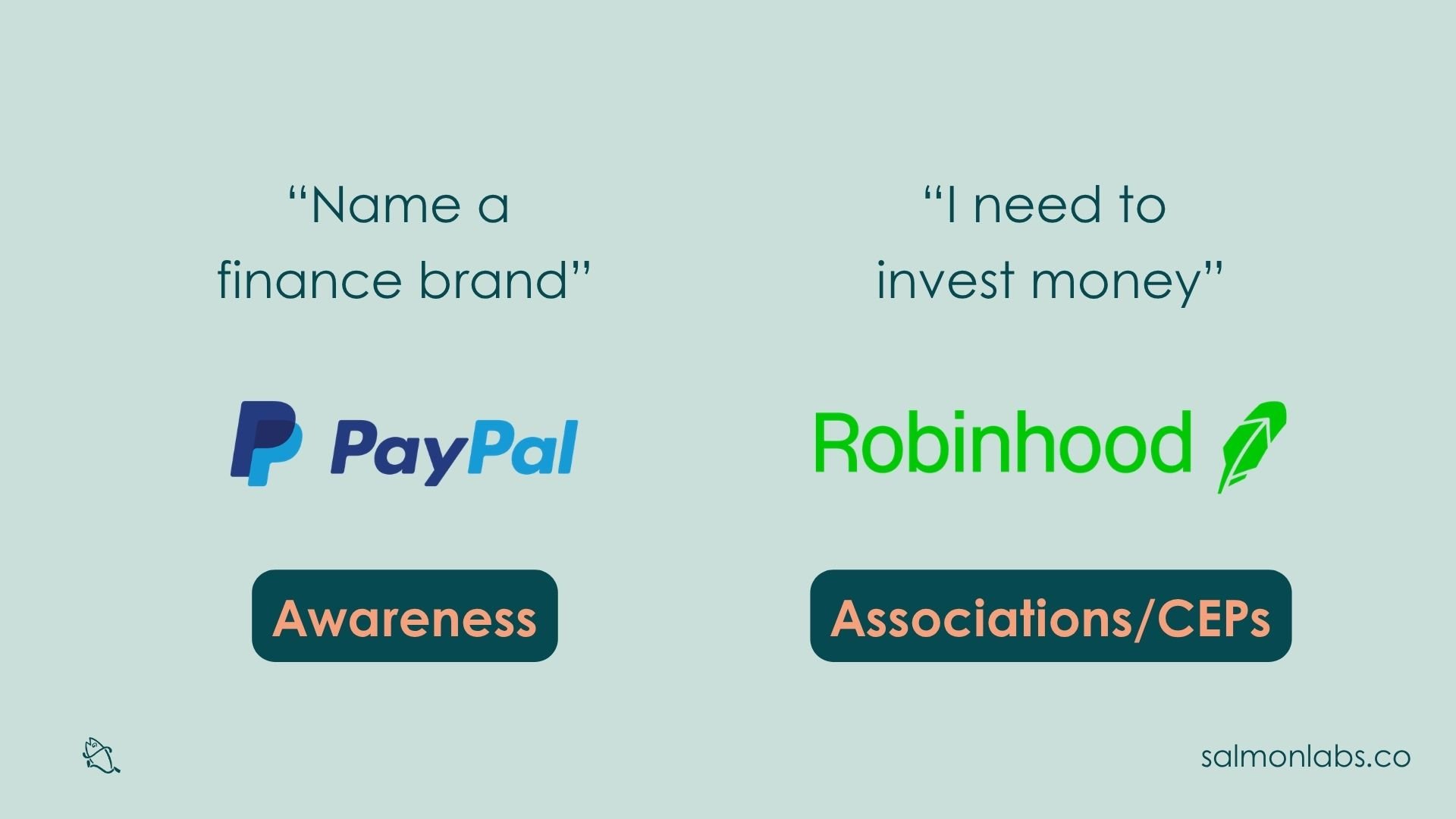
A common mistake: they’re not just about building awareness. Awareness is simply a measure of how likely your brand is to come to mind in isolation. What makes CEPs interesting is that they’re about which associations you’re linked to in a buying context.
If I ask you for a financial services brand you know of, you might say PayPal. But if I ask you for a financial services brand you know of to invest my money, you might say Robinhood. So PayPal has more awareness, but Robinhood has stronger links with the “investing” CEP.
One final thing worth knowing is that CEPs operate at a category level, so it’s perfectly normal for multiple brands to be associated with multiple CEPs. What you want to aim for is that, relative to other competitors, you’re more associated with a particular set of CEPs, so that your likelihood of being chosen at point of sale is greater. You do this by ensuring you have consistent investment behind those CEPs, and also distinctive brand assets to ensure that people think of you for the right reasons, and recognise you when they’re in market.
One action to take
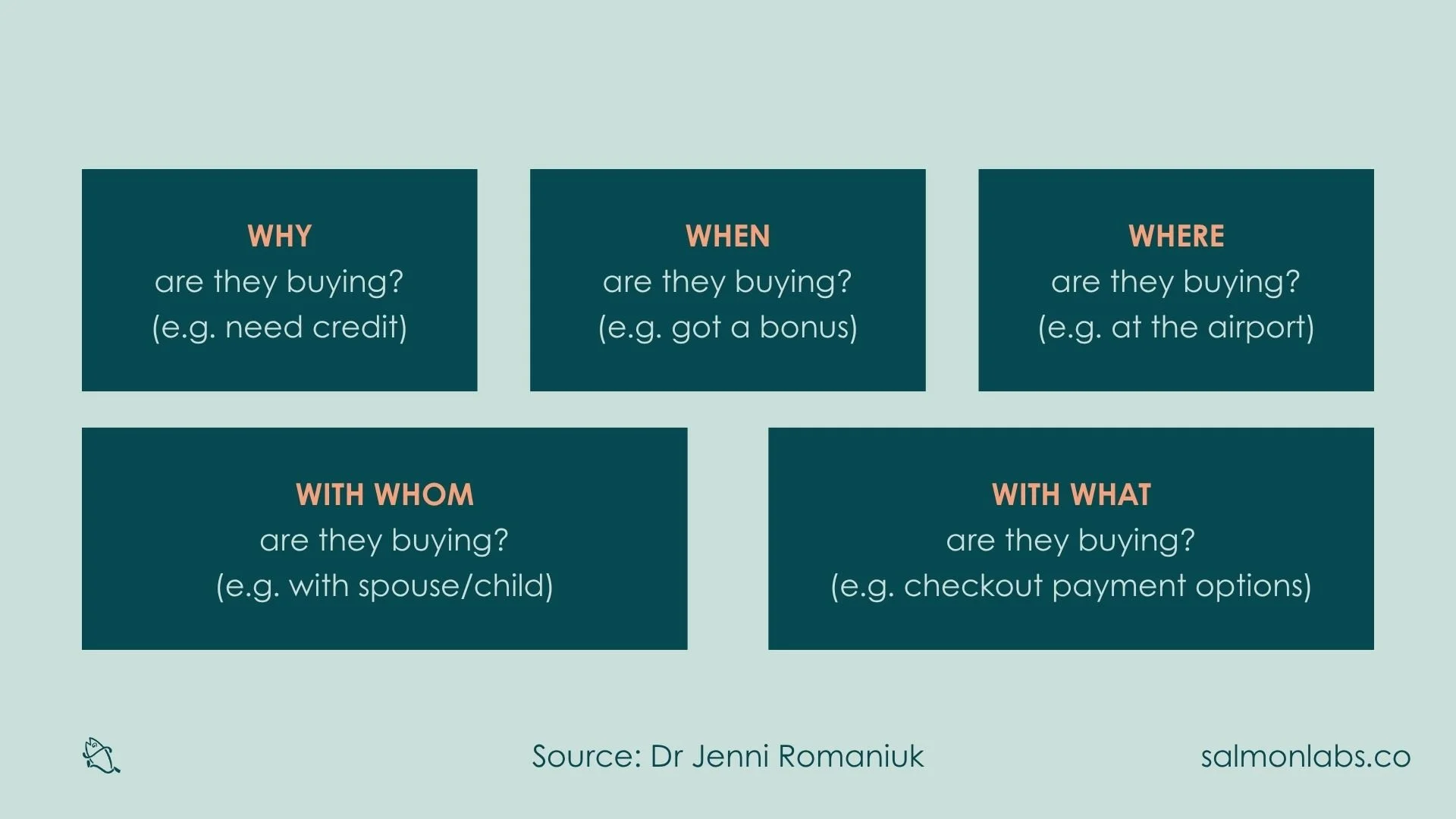
Think about the categories or clients you’re working on and map out the different CEPs that might be affecting their purchase decisions. Do the same for your direct competitors or even substitute products if applicable. You can speak to your clients about this, dig into their own market research or audience segmentation, or even ask sales reps directly as they’ll instinctively know a lot about what triggers someone to buy a particular product or service.
Use this framework to help you organise your thoughts, debate them with your team, and next time you write a brief go beyond “awareness” and think: what associations do we want to build with this particular piece of brand communications, content or experience?
One quote to inspire
“A lot of advertising is geared to persuasion rather than building mental availability. Persuasion is about assuming you’re in the room and you’re arguing your point, whereas mental availability is about getting into the room.” – Dr Jenni Romaniuk, Ehrenberg Bass Institute
Written by Rob Estreitinho, a comms and social strategy consultant and the founder of Salmon Labs. You might also enjoy getting my newsletter. 6,000 readers at a 60% open rate, read by agency and in-house strategy leaders from all five continents. Subscribe below.