

How strategists can add value when the rules keep changing
Last week I was super proud to go to the Clube de Criatividade de Portugal not for one, but for two speaking engagements. A talk to some 200+ people on how the next decade might be defined by Tetris Teams not just bloated title-heavy operations, and a sold out masterclass to 65+ people on how to minimise the Handover From Hell between strategy and creativity. Lots of fun, good feedback, and excellent food.
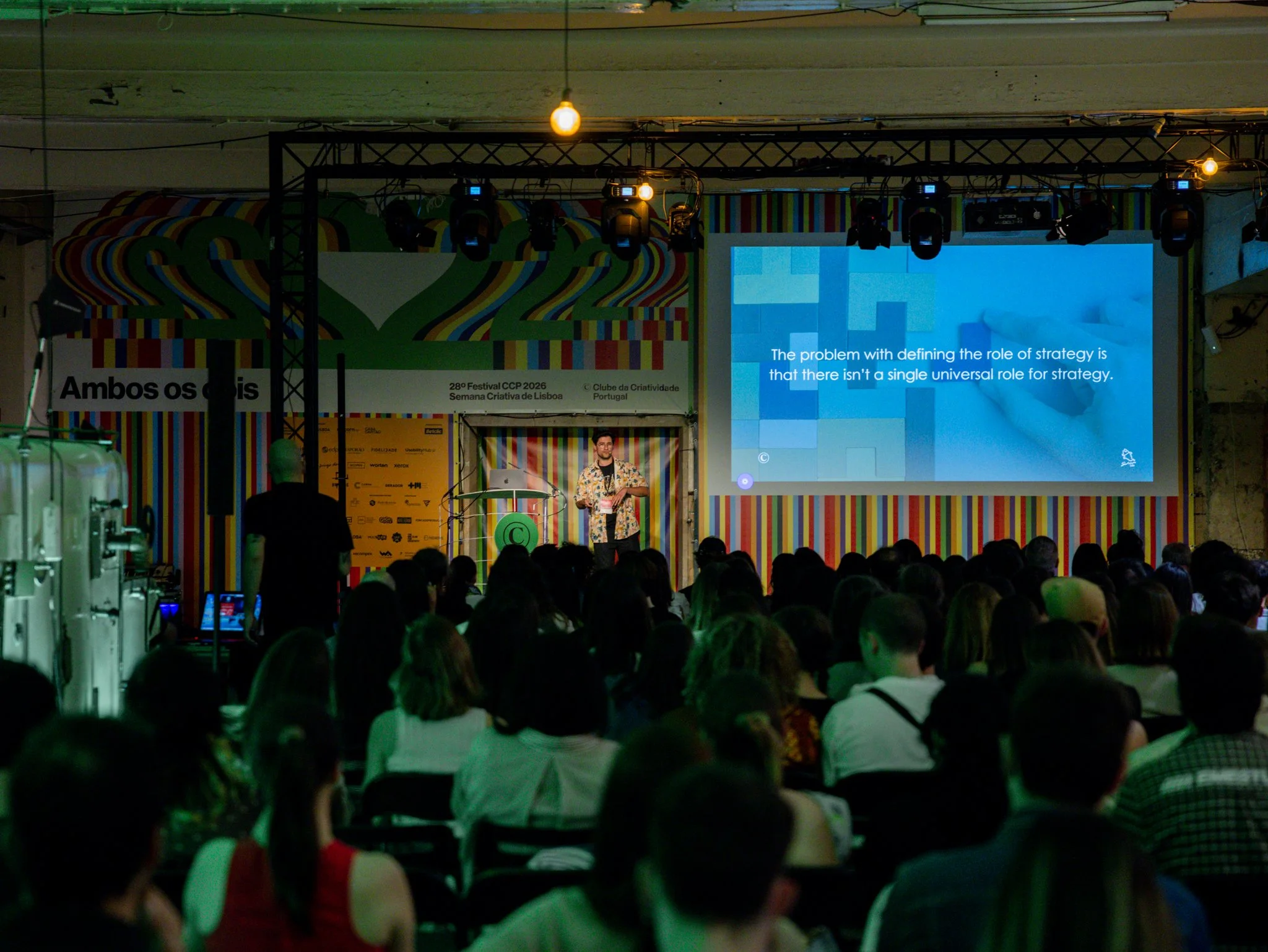
Doing my best to cosplay a late 30s guy with an exotic shirt.
You really had to be there to fully absorb all my dad jokes and swearing, but the next best thing I thought I’d do is capture some of what I argued in both sessions, because building in public is my love language at this point. Plus, I’m all about building writing habits, and documenting things I notice as I go along is a huge part of it.
Alright, let’s get into it.
The different roles a strategist can play
The brief for my talk was simple enough, which of course doesn’t make it easy: how do you get a market like Portugal to value more the role of strategy? For context, strategy is a relatively new discipline over there, and I am told I was the first Portuguese strategist to have a speaking slot at the festival, which makes me feel like some strange adventurer. Anyway.
I thought about this right until the very last minute the day before because I couldn’t work out what is the one role. So instead I did the classic thing of reframing it from a single role, which presumes a single way of working and a single type of project, and made our role(s) far more malleable instead.
Of course, you’d be forgiven to think there is only one way to do strategy, because after all this is how the industry was born in the ad scene at least.
Do you always need a proprietary methodology?
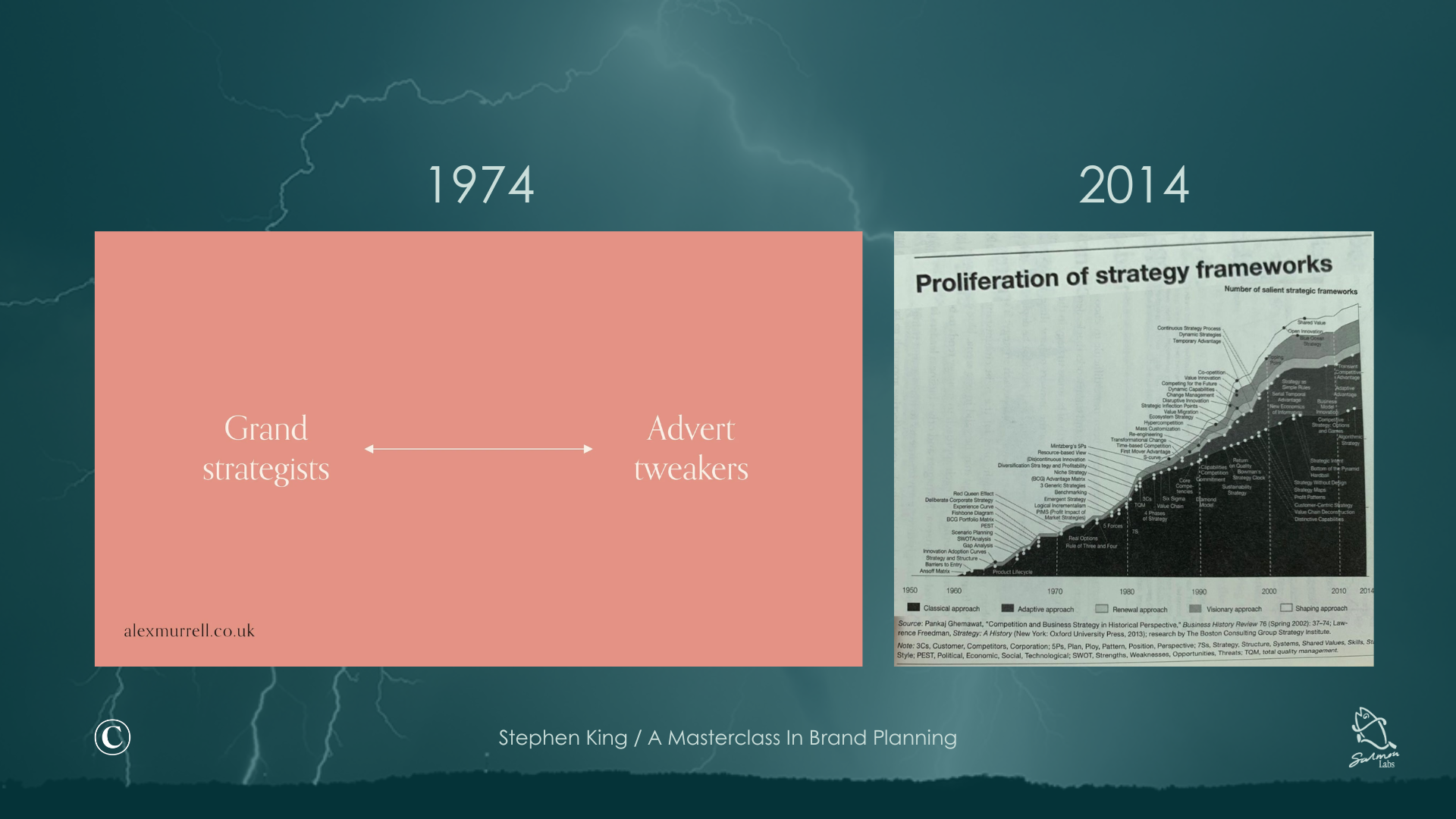
Way back in the 1970s, you were either a ‘grand strategist’ or an ‘advert tweaker’, which of course has all sorts of encoded biases about how the truly meaningful value comes from being a grand something, not a tweaky something. But fine, let’s go with it.
Problem is, you fast forward a few decades, and across the board you have more strategy frameworks than your little brain can handle. Of course, this goes way beyond agencies, but they are affected by it nonetheless.
And we’ve all seen it: every agency has a proprietary thing which is basically a new way to frame the same process as the other agency’s proprietary thing. Over here we have something that’s like a triangle. Over here we have a diamond. Over here we have the 4 Cs. Over here we have the 5 Cs. Over here we only talk about logic and magic. It goes on and on and on.
We’ve made strategy work far too complicated
None of these things are wrong, they just add to the perceived complication which, I’d argue, makes clients value the job less, not more. To illustrate that, let’s look at some stonks data from BCG that really opened my eyes.
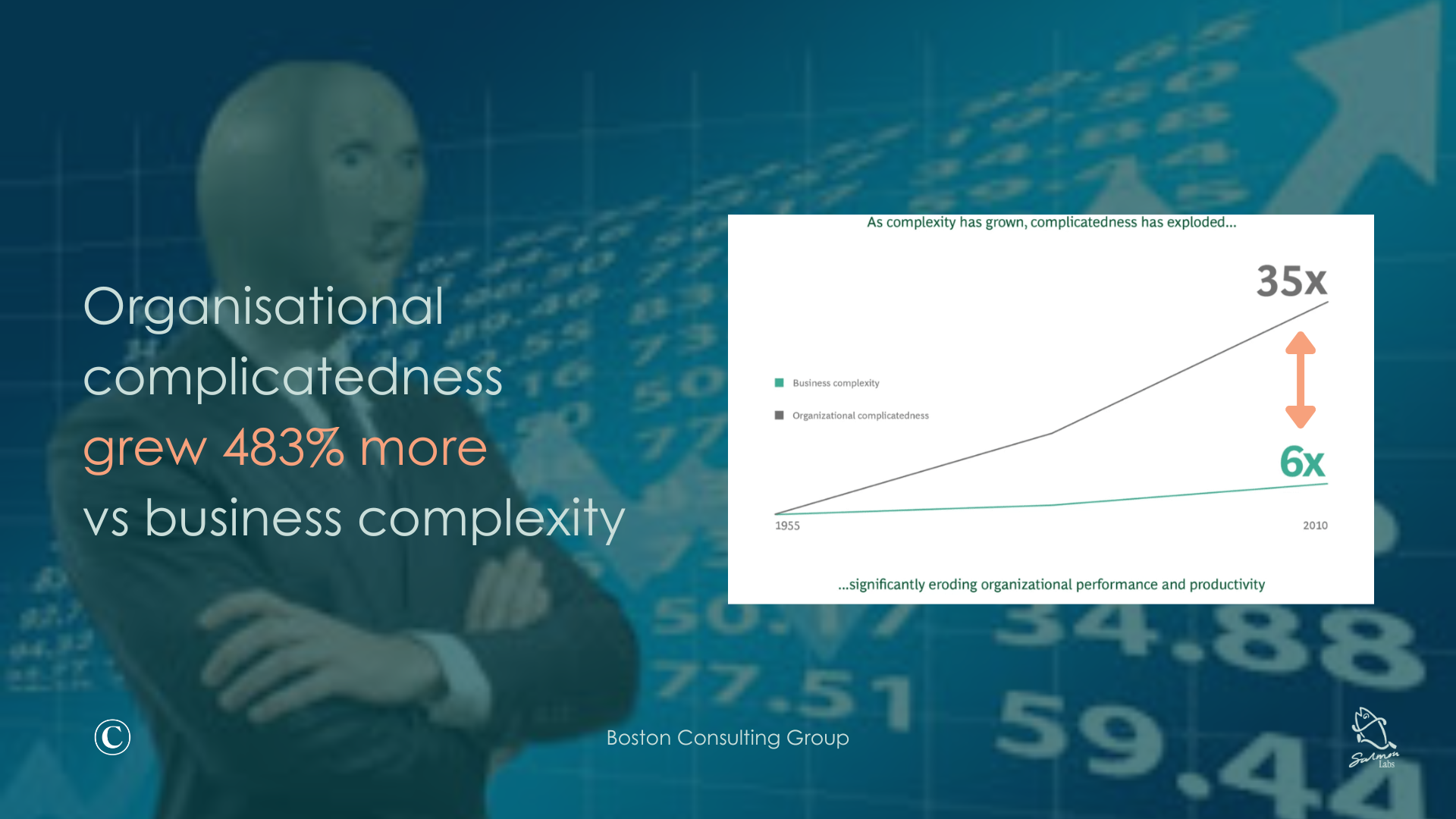
When I did therapy I learned a lot about the variety of ways in which I over-compensated by my own shortcomings. You wanna talk about over-compensation? Here are some figures for ya: as the complexity of the business environment grew by a factor of 6x over 50 something years, the complication introduced by organisations grew by a factor of 35x. Or, for the analyst brains among you, that’s a differential of something like 483%. Yikes.
So far, so good. Economy grows, low interest rates galore, everyone can be a millionaire if they have the right idea, and then… stuff happens. Covid. Supply chain crises. Energy crises. Inflation-zilla. Onetwo three wars. Tariffs. Oh, and a little something called AI because the last 6 years needed a lil’ twist.
Agency headcounts are decreasing
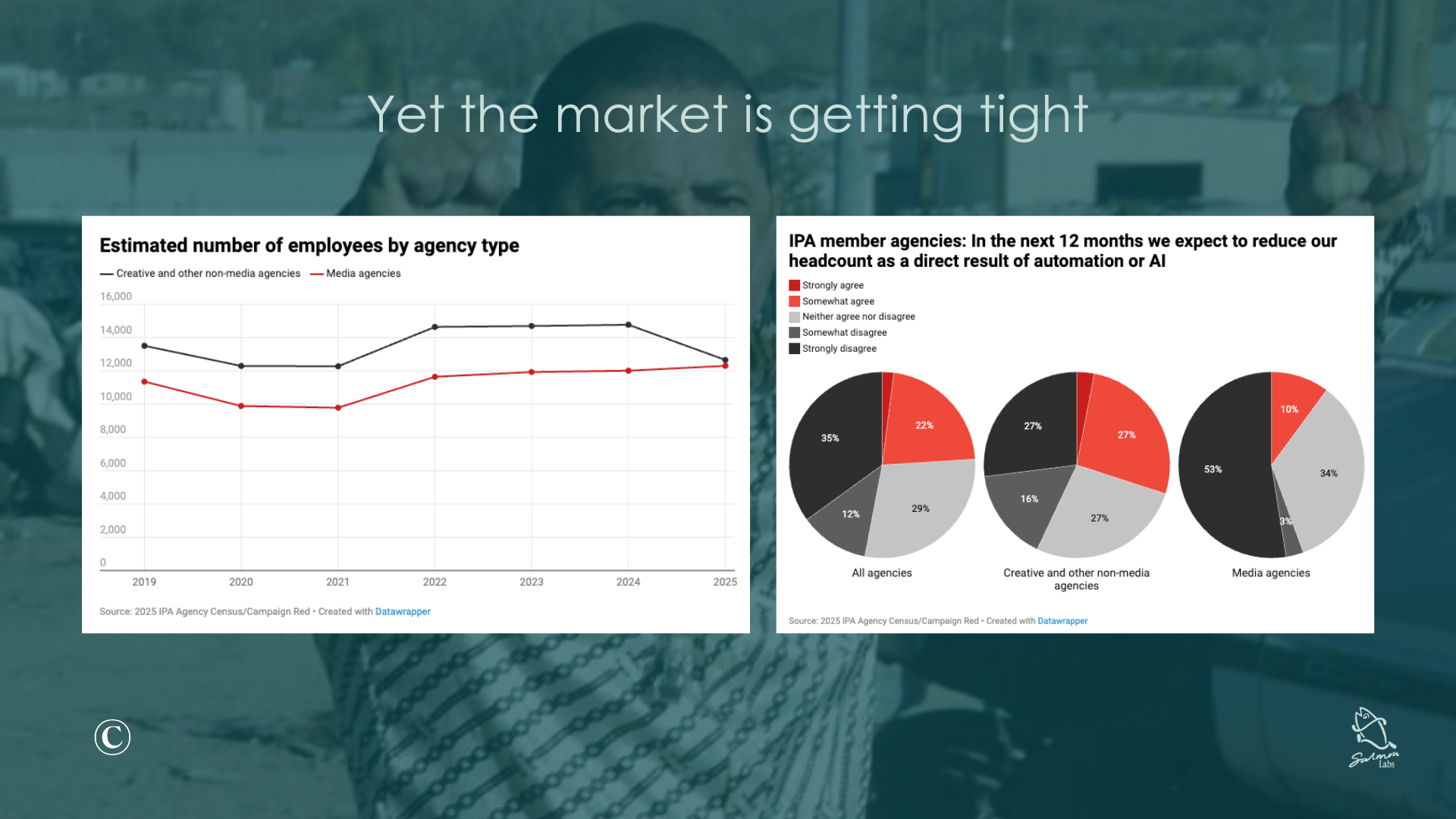
Recent IPA figures started painting a bit of a grim figure: agency headcounts have either stagnated (media), or are contracting (creative). But all types of agencies are pretty much looking ahead on how to best reduce headcount as a result of automation or AI. Now, this may be the excuse, not the real reason, but whatever way you cut it, it’s in loads of plans out there.
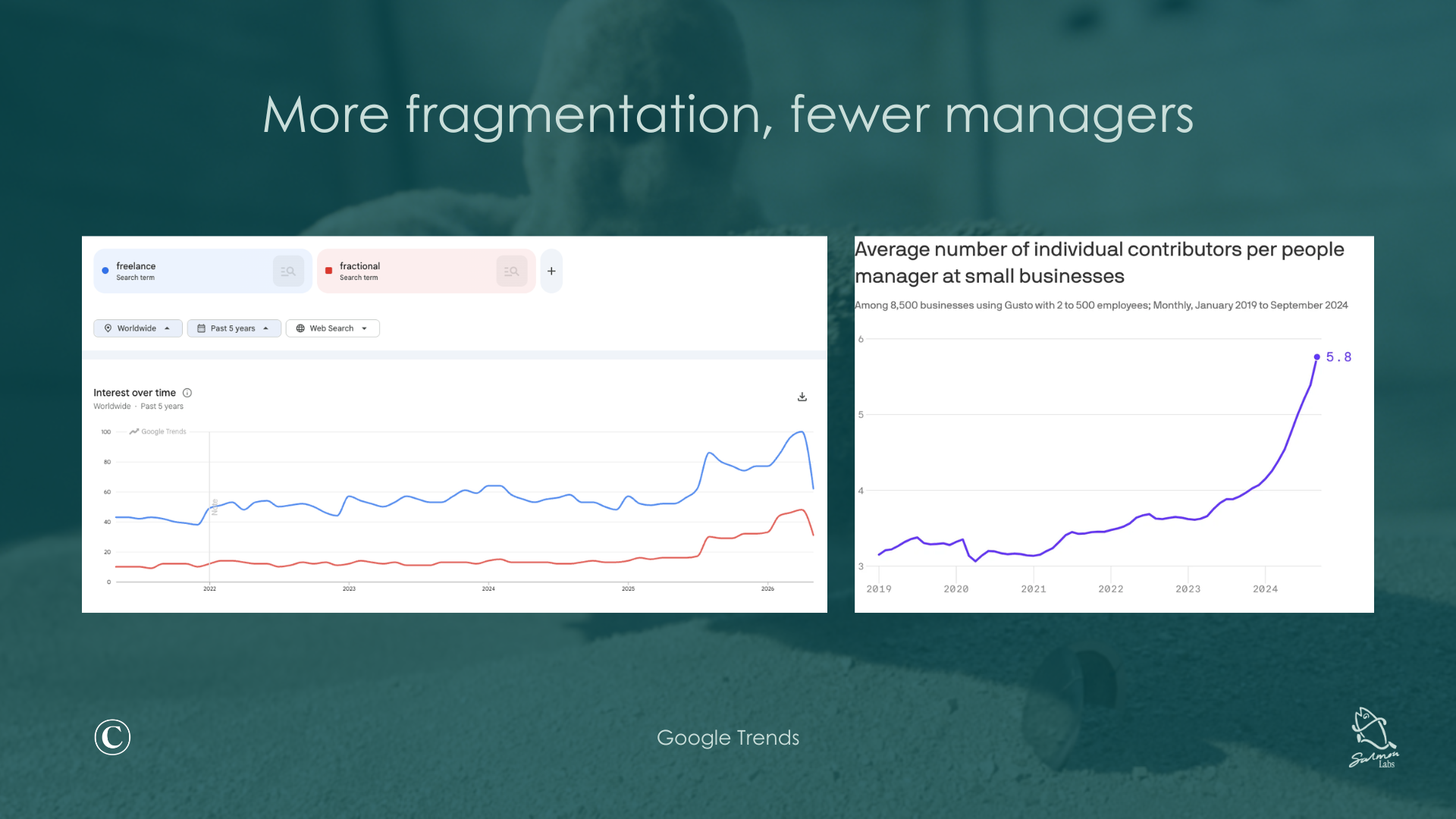
We take a slightly wider view and what we see is, on the one hand, part of the market stagnating, and on the other hand new forms of operating in a job or as a team emerging. Freelancing and fractional search intent has been slowly but surely increasing. US data shows the ratio between individual contributors and managers is getting much wider, which either means more individual contributors or far fewer managers because we need people who just do shit.
Do you need to be a generalist or a specialist?
Be that as it may, it opens an interesting question: as a strategist, am I better off being a generalist or being a specialist? So far the market has rewarded specialists, but at the same time the generalists need to act as the glue of the work being done. Or is this even the most useful framing of the premise at all?

I find that the generalist vs specialist debate is a little bit dumb, because everyone’s a specialist of something. Even CEOs tend to be CEOs with domain expertise of a specific industry, so this feels a bit like semantics-core and not very helpful. What was helpful was to spot a few months ago this graph that helped me look at things in a slightly different lens. Or rather, different shape.
Why strategists need complementary skills
You see, the problem with generalists vs specialists is they put us on the trap of the grand strategist vs ad tweaker. Which is to say, one of them invariably is seen as being above the other, instead of just happening to be involved earlier in the process. I can’t speak for everyone, but what I can tell you is that every time I insisted I was a generalist, I was secretly not trying to get attached to work that frankly I thought I was above, either because I was too senior or because I just didn’t want to do it. It’s not a polite thing to say, but it’s the truth.
However, when you look at the structural dynamics of the market, you start realising that the top-down mentality of generalists vs specialists is not as helpful as thinking about how you can best fit the nature of the team you’re going to be working with. So being more precise about who we are and what we actually do matters, because it helps others know where to best plug us in.
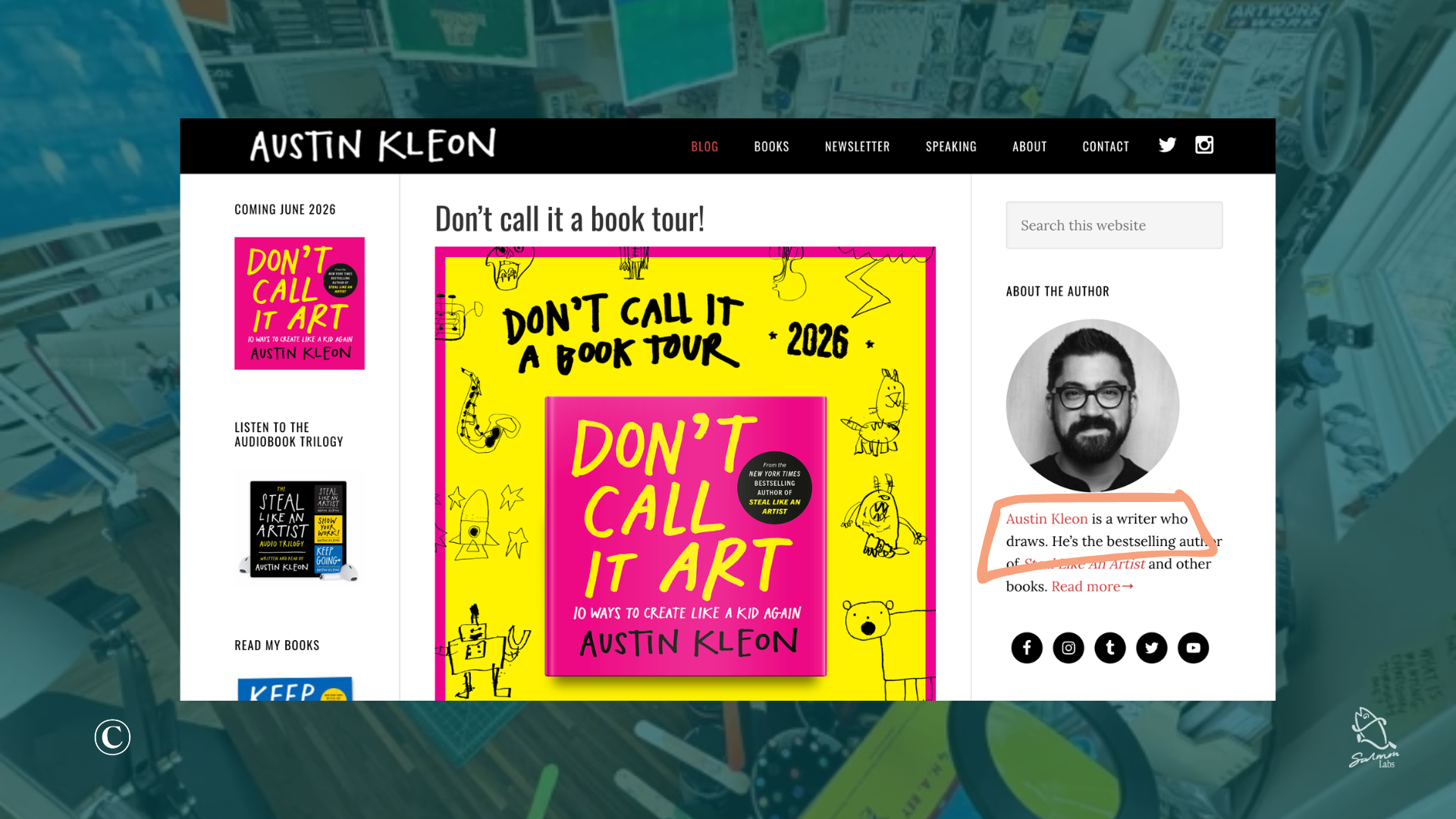
Austin Kleon is one of my favourite newsletter writers out there, and writers in general, and I’ve always enjoyed how he describes himself: as a writer who draws. This structure – a X who Y – feels quite practical and useful as we think about our own complementary skills and how to best make them fit with other people’s complementary skillsets. Someone once told me the best way to think about our job as a strategists was less as a T shape (generalist with one specialism), but more a X shape (two specialisms that don’t often go together).
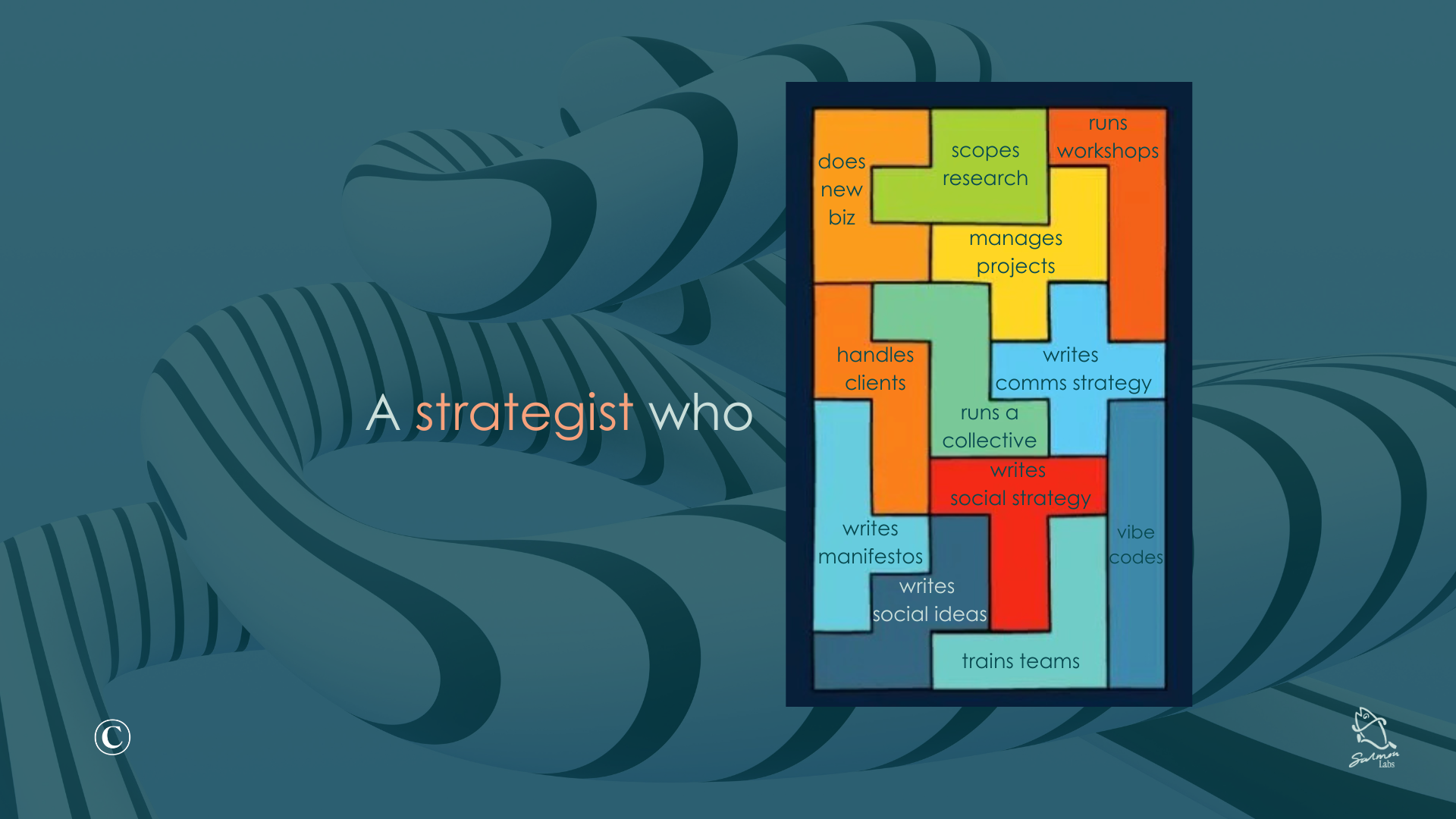
So I started playing with something like this for myself, and realised that I – and you – all contain multitudes that we ought to write down and combine in the way that best fits the project. So rather than assuming our role is only ever one thing, we should assume our role will fit the overall structure of what needs to be done. Sometimes you need a comms strategist who knows how to brief social, sometimes you need a social strategist who knows how to speak the language of brand, and so on. How we position ourselves is, and always will be, determined by who we’re positioning ourselves to. Context, not just rigid titles.
Always start by asking “what’s the role of strategy?”
Which means that rather than assuming there is only ever one role for strategy, we should always ask at the start of a project, and even throughout it: what is the role of strategy here?
I’ve had client work where the role was to absorb what stakeholders had to say and play back a coherent view of what was already there. I’ve had projects where clients already had pretty much everything locked in – target audience, positioning, platform, key messages – and they just needed advice on how to unpack their tone of a voice in a way that was culturally appropriate for the market and the target audience. I’ve had client work where they had a roadmap and needed everything, from naming all the way to the advertising.
Of course, as strategists we always want to go for the meaty stuff and do everything end to end, because we’re control freaks aspiring to deliver as much value as we possibly can. But the research I see and the conversations I have about career advice for strategists keep suggesting that the market just isn’t there, so we need to learn how to be much more modular and adaptive in our contributions while keeping a high bar for quality. In essence, know which fights are worth fighting at any given time.
Make your mind as malleable as possible

The other part of this whole equation is that we insist that, just like there is one role for strategy, there is one way for strategy to do its job. You get given a brief, digest it, challenge it, do a Q&A maybe, then get to work, don’t speak to clients for a couple of weeks, over-think the whole thing, come back with your perspective, and clients say “oh yeah actually there was a change in this piece of the puzzle because the GTM team came back to us and we need to redo parts of this”. Fun! Or maybe, there’s a more malleable way of adding value.
Every time I start a new client project, I not only try to get to the bottom of the role of strategy, but I try to get to the bottom of how they like to work best. Some clients love the reveal. Some clients hate it and want to riff and be part of the process, if nothing else because it gives them a chance to keep you updated on any significant pieces of news from their end.
Some clients like to kick things around on Slack, others over email, others in meetings. Some clients just want you to offer an external perspective on what they’re already doing, as an advisor. Some clients want you to run the entire project and update them once a week. It varies so much based on the main client’s personality type and the organisational culture in which they work.
But until we get to the bottom of both those things – what is my role here, and how do you work best? –, we’re on path to a high probability of a project feeling frustrated because “the clients don’t get what I’m trying to do”. This is like saying the target audience of your campaign doesn’t get your strategy or creative idea, and therefore it’s their fault not yours. We need to grow up and take responsibility for being adaptable to what circumstances need from us.
Three shifts I’m seeing in the world of strategy
So this sums up a few of the shifts I am seeing and some of the most fruitful conversations I have with my own clients. I see less importance placed on fancy titles, and more an implicit understanding that a project team is like a game of Tetris, and it’s crucial that we know how to best fit and add value to that particular circumstance, not just as a general “I reframe problems” hot take. It also helps if you keep a list of the best people you know in strategy and ideas, for optimum results.
From a mindset perspective, we need to move past the idea that strategists are always the captains, the masterminds, and more accept that our role is probably one of the most chameleonic there is, and indeed that’s where a lot of the fun is. Some days I bring my cultural strategy hat, other days I bring my comms strategy hat, other days I bring my TikTok tactics hat. This benefits different clients in different ways, so the role is by definition deeply contextual.
As the market contracts and yet fragments into more freelancing and fractional and project work, there’s something interesting that happens to the nature of competition. I actually see more of my peers studying how to best complement each other, because when you’re a tiny operation it’s much harder to see the edges of the market and therefore there’s room for more people.
This is the opposite of how multi-national businesses tend to think, because they think in terms of domination, and the bigger you are, the smaller the pool of organisations you can work with to make it worth your while, and therefore the more it becomes a zero sum game of “for me to win my competitors must lose”. When you’re smaller or think like an indie, there’s a sense of co-operation where if I find something where I can bring a partner in, I’m playing my cards so that next time a partner finds something they can bring me in, chances are they will.
We need to embrace small market mentality

But really for a market like Portugal the conclusion is quite straightforward: none of this stuff, from compression, to complementarity, to needing to wear multiple hats depending on the project, none of it’s new. It’s just how smaller markets operate, not because it’s more fun (tho it is) but because it’s needed.
So whenever we think about the role of strategy as knowing what this game of Tetris looks like and where we can play the best possible game, turns out how smaller markets operate is how bigger markets are now forced to operate too. So, in that sense, if you were brought up in how a smaller market needs to operate, you’re actually ahead of the curve. Chances are you can be a variety of types of strategist over the course of a given year, and this not only makes the job more meaningful, it also means your market value might go up. Or at least not go down, because sometimes risk mitigation is another way to win.
How to avoid the Handover From Hell
All of the above determines how we can best work with budget holders, but there’s also another piece of the puzzle that often goes to shit if we don’t think about it carefully: how we brief creatives, or work with them in a useful way. Again here the classic thing is to assume that one briefing template is what you need and boom, everyone falls in line because the template is so perfect.
Except a few years ago I wanted to do this very theory to the test, and I took a brief I wrote, which was signed off by the core team, into two different creative directors: one which was in charge of the account as a whole and its above the line advertising, the other which was in charge of the social and content type of outputs we needed to produce. So I showed them both the same brief – image below – and asked for their feedback. Same brief. Two responses.
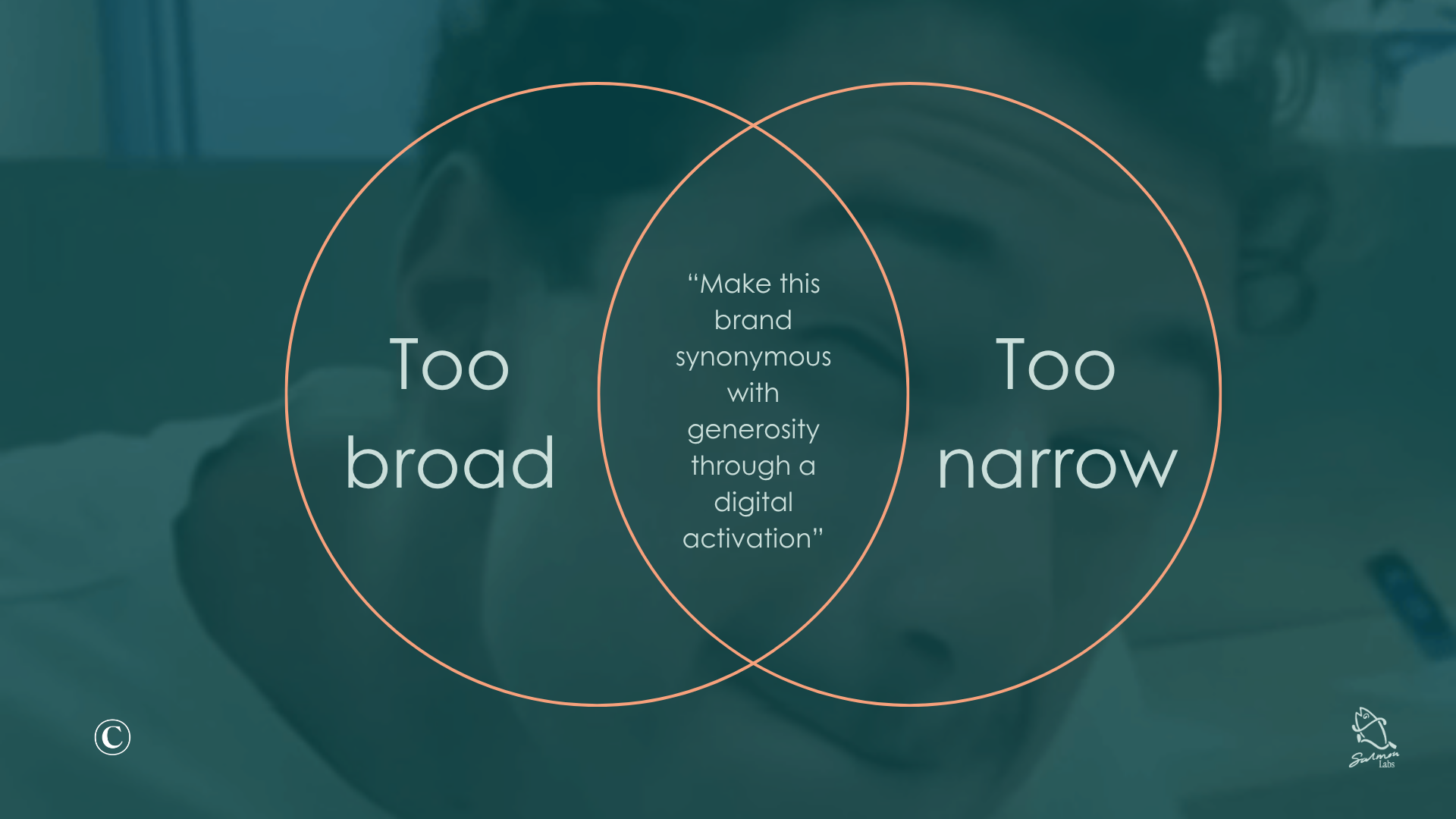
Now, I’m not sharing this because I want to say one of these CDs was not being helpful, or worse, they were both being unhelpful. What I’m saying is that, from a probabilities perspective, if we assume we only get to brief the work one way, chances are we’re missing out on important nuance of who we’re briefing and in which circumstances. In other words, we have now entered the… wait for it…
You need the right context and the right casting
Over the past 15+ years I’ve experienced tons of Handover From Hell, which is not really trademarked but let’s pretend it is so I can feel a little bit more important for a second. Often between strategy and creatives, but sometimes also between strategy specialisms. And the reasons of that can be manifold, but I boil it down to a function of context and casting.
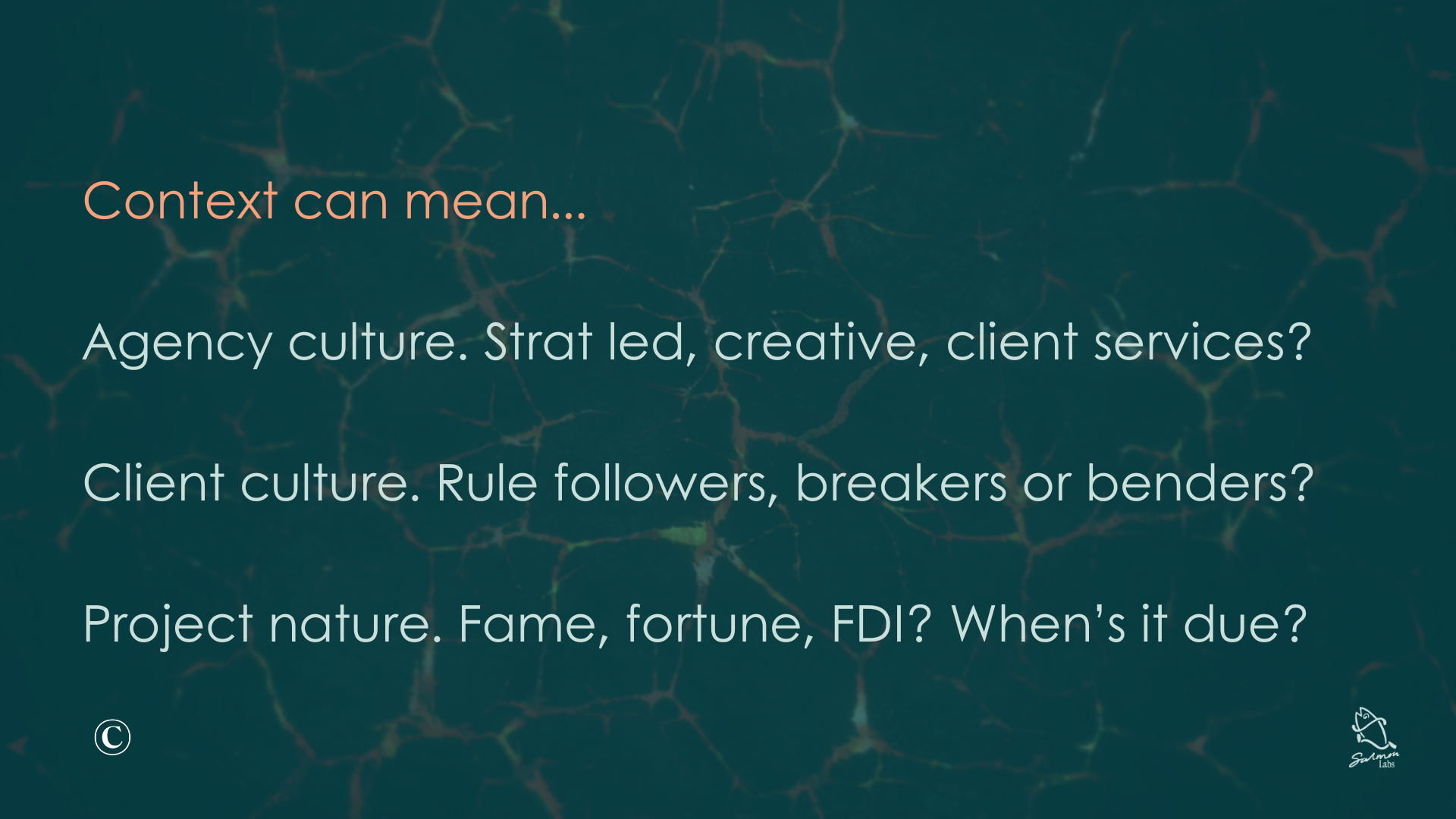
Context can be stuff like agency culture, client culture or nature of the project. Some agencies are strategy led so strategic precision on stuff like a proposition is mandatory, even if sometimes this stifles creativity (I’ve seen this happen, it’s not fun because you think you’re right, and you are right, but it’s also pointless). Some agencies are more creatively led so ensuring your work doesn’t feel too precise so that creatives can do their thing is more important, but at the same time you do need a precise definition of a problem or a question they need to answer. Some agencies are more client services led so all of the above may be important, but what’s really important is the client feels buys into stuff as we go.
Knowing your client’s culture is also important. Some clients are by default rule followers not because they’re not good at their jobs, but because they’re surrounded by all sorts of politics that mean they need to constantly enforce things to avoid other people feeling they can just go wild with the brand too. Some clients are rule breakers, so they acknowledge that the job here is to do stuff that feels inherently scary and then we’ll sort it out. Some clients are what I call rule benders, where they know there are things we need to adhere to, but have no problem bending them to suit the agenda of what the work will be.
Project nature also determines how shit goes down. Some projects are about fame, so we want to go big and expansive and scary or the juice is not worth the squeeze. Some projects are about fortune, meaning you’re getting well paid and therefore you want to ensure you’re not too wasteful with it (fame projects tend to give you fuck all profit, many of them actually are done at a loss). Some projects are just FDI (Fucking Do It), because we’ve already burned too much political capital with the client or we ran out of time or the CEO has very precise requirements for this, which… well, it is what it is. Do what you can.
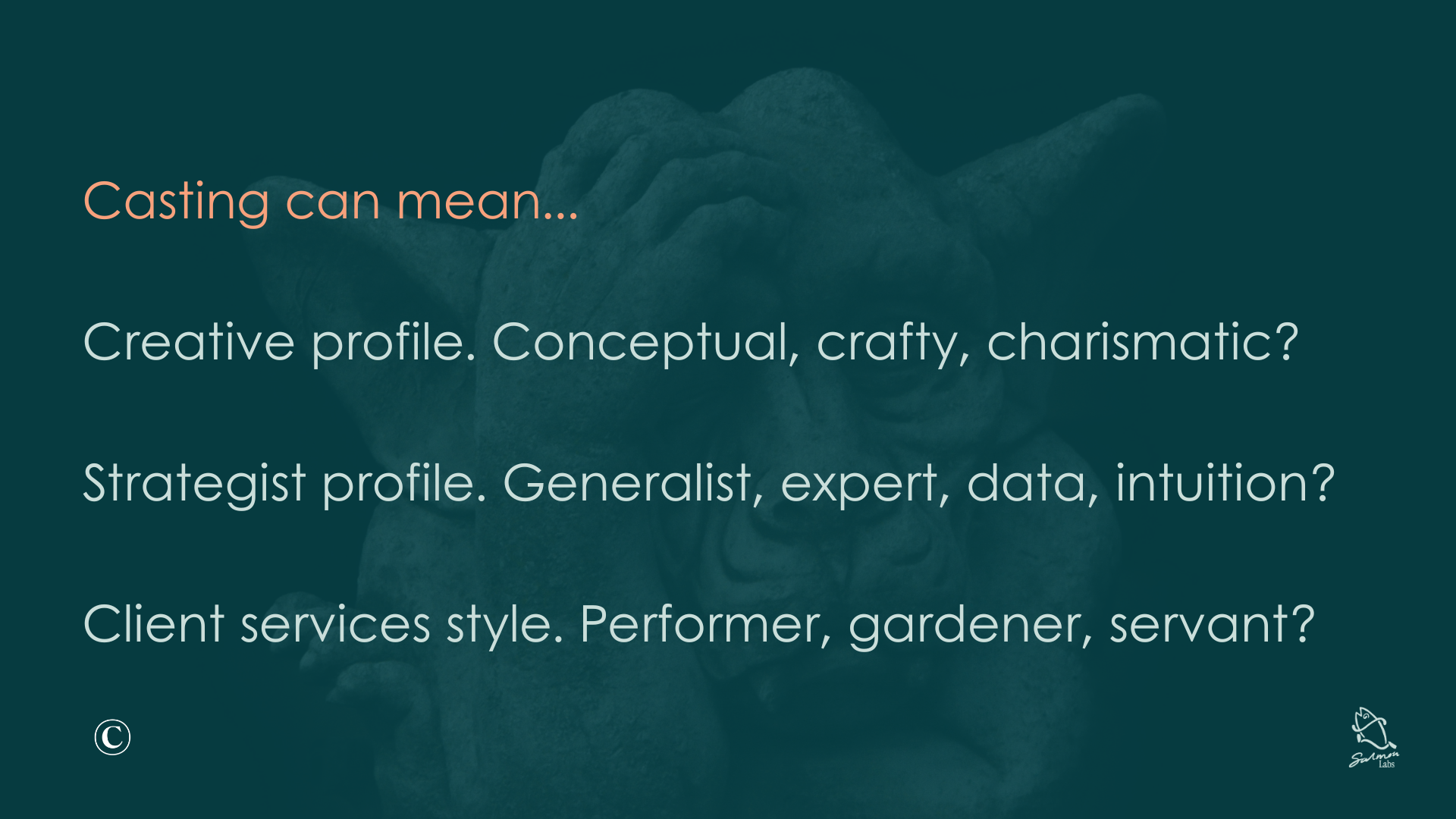
Casting is equally important, because even once you determine the context you’re operating in, we still live in a society and need to know how to get along with people who might be very different from us. I often boil this down to three aspects: creative profile, strategist profile, and client services style.
Again, none of these are better than the others, they’re just different (though ‘servant’ might be a bit unfair, but it doesn’t make it less true or frustrating).
I usually can plot the creative person I’m working with in one of three ways. Sometimes they’re highly conceptual and big idea thinkers, the classic version of what you expect from a creative. But others are less that and more craft experts, so say for example they might not have the big five year platform kinda thinking, but they are exceptionally good at putting together an experiential campaign or coming up with a TikTok content series that will actually be entertaining and effective. And some creatives may be good at both of those things, but what they’re really good at is selling ideas because they’re very charismatic and/or clients tend to trust them in very deep ways.
Similarly, the type of strategist you are or work with will determine loads of whether the Handover from Hell occurs or not. Some strategists see themselves as generalists and act as the glue of a project, so as long as things like the overall problem, proposition or narrative holds, they’re broadly ok with stuff. Some are more on the expert side, so they care more about stuff like how to best combine best practices with distinct and differentiated results. Some are more data led and have all the quant-y stuff lodged in their brains for whenever the argument requires it. Others just go on intuition and can rationalise pretty much anything as long as the idea is powerful.
And last but not least, different client services people service the client in different ways. Some are by definition performers and love the reveal and know their clients love the reveal because it makes the meeting feel like a spectacle you look forward to. They trade on excitement and excitability. Others – my personal favourites – are what I call gardeners, in that they’re always carefully planting the seeds for what will come so that clients are kept in the loop and there are few surprises and therefore the chances of something getting bought, or at least the big risks being anticipated, go drastically up. They trade on narrative consistency and sellability. And some client services people, often through not real fault of their own (tho sometimes yes), just worry about what the clients will buy. They trade on satisfaction scores.
Four roles you can adopt in any creative project
Point is, with all of the above we now have some ingredients to start mapping how to best add value as a strategist, without defaulting to “there’s one way I play this role and if you don’t like it you can kiss my ass”. That only works if you’re a lead character in The Boys, and even then… eh, not always.
So, if the problem is that there isn’t a single way for strategists to add value to creatives, what are some ways in which we might? I got to this simple quadrant that looks at two factors: the role of strategy (divergence or convergence), and what creatives need (a problem or a proposition).
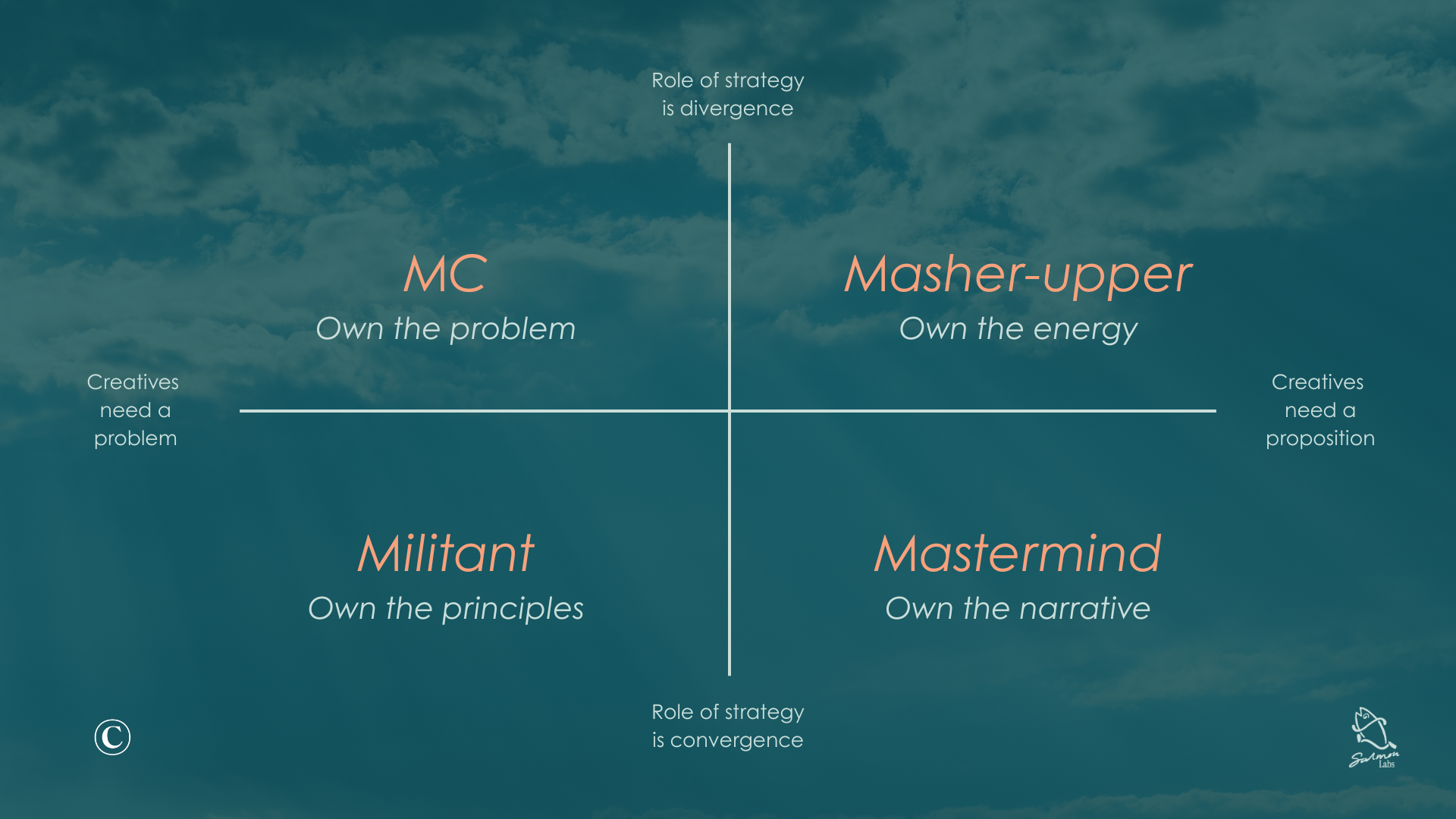
Now, most of the time we like to assume that strategy, done well, is only at the ‘mastermind’ level, but I think this only works for the grand strategist kind of role, and in case you haven’t noticed, not everyone can be the lead on everything. It’s just not how the world works I’m afraid.
So, to illustrate the archetypes, I wrote a little set of rules of thumb on how to play that role effectively, based on my experience over the last decade. They’re not perfect encapsulations of the roles but that’s not the point, the point is that they feel contextually different enough from one another.
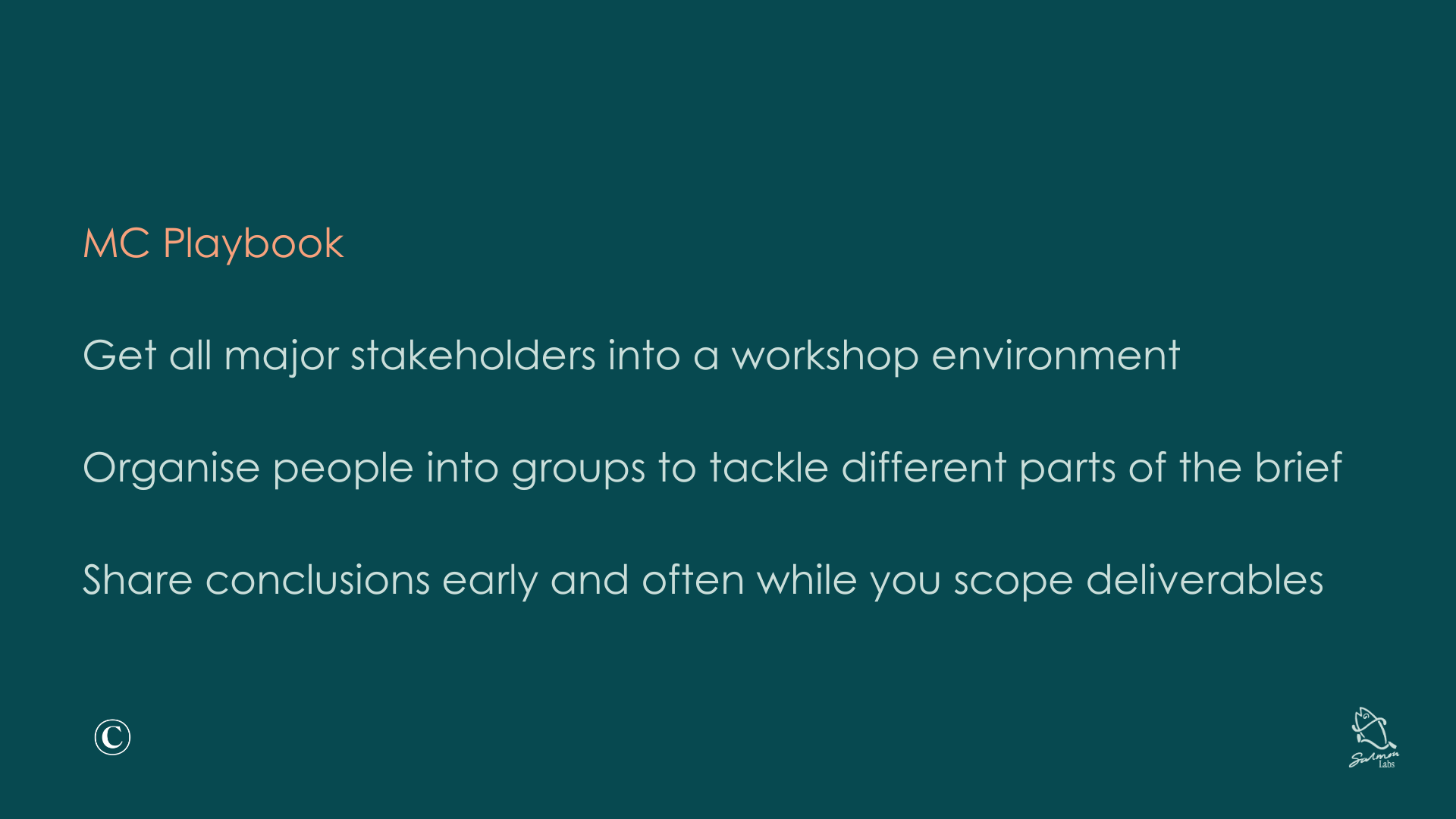
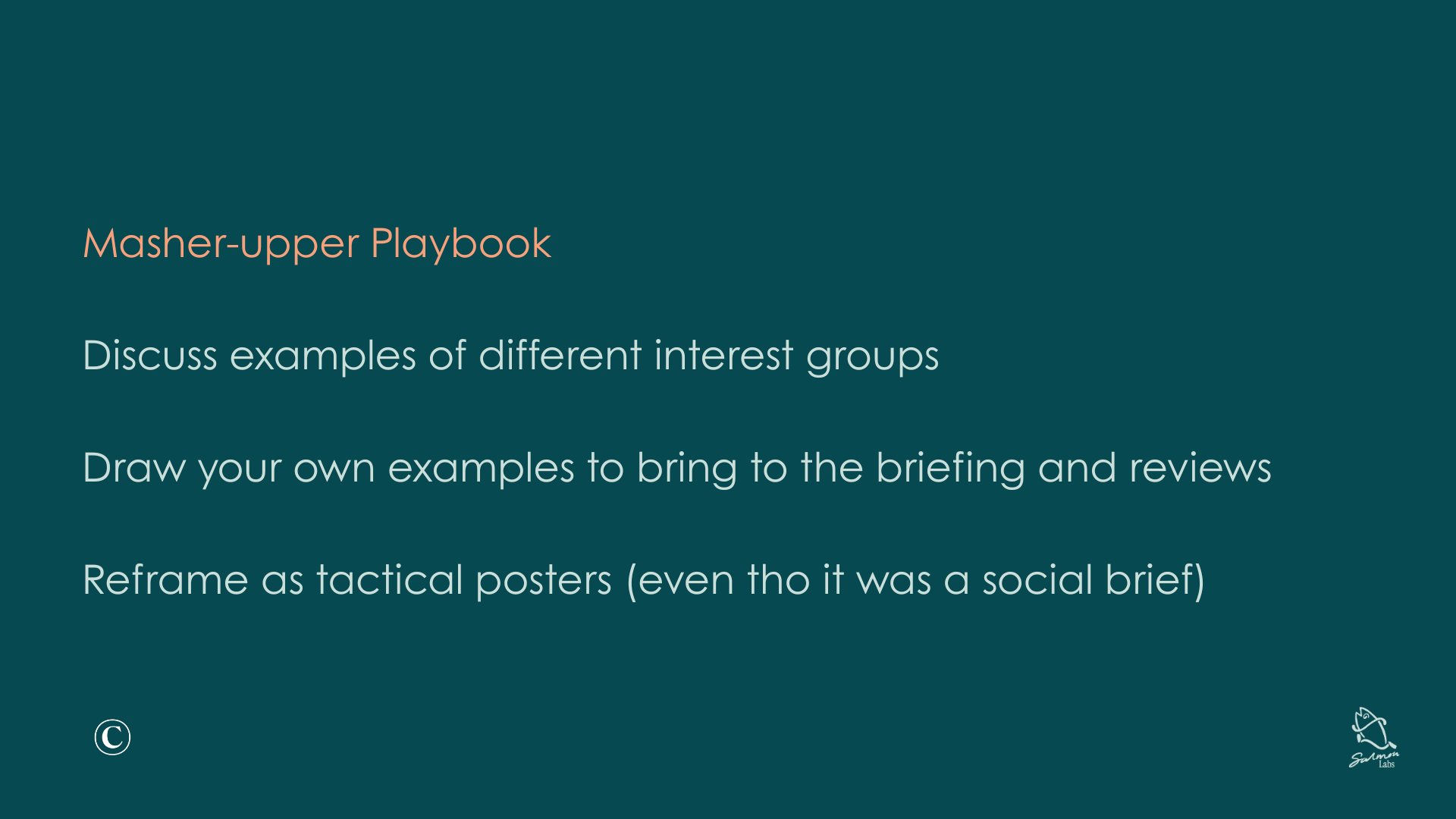
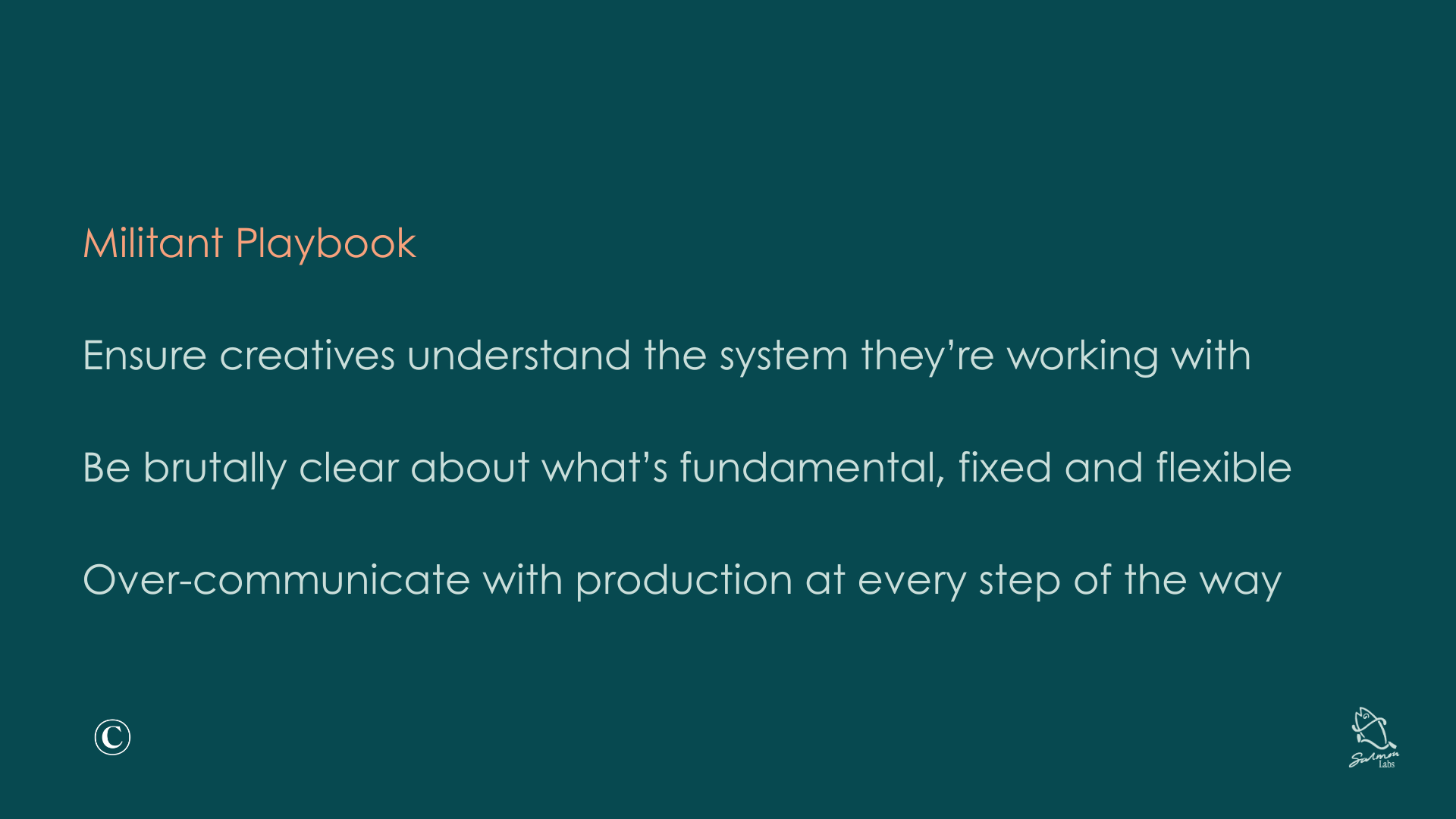
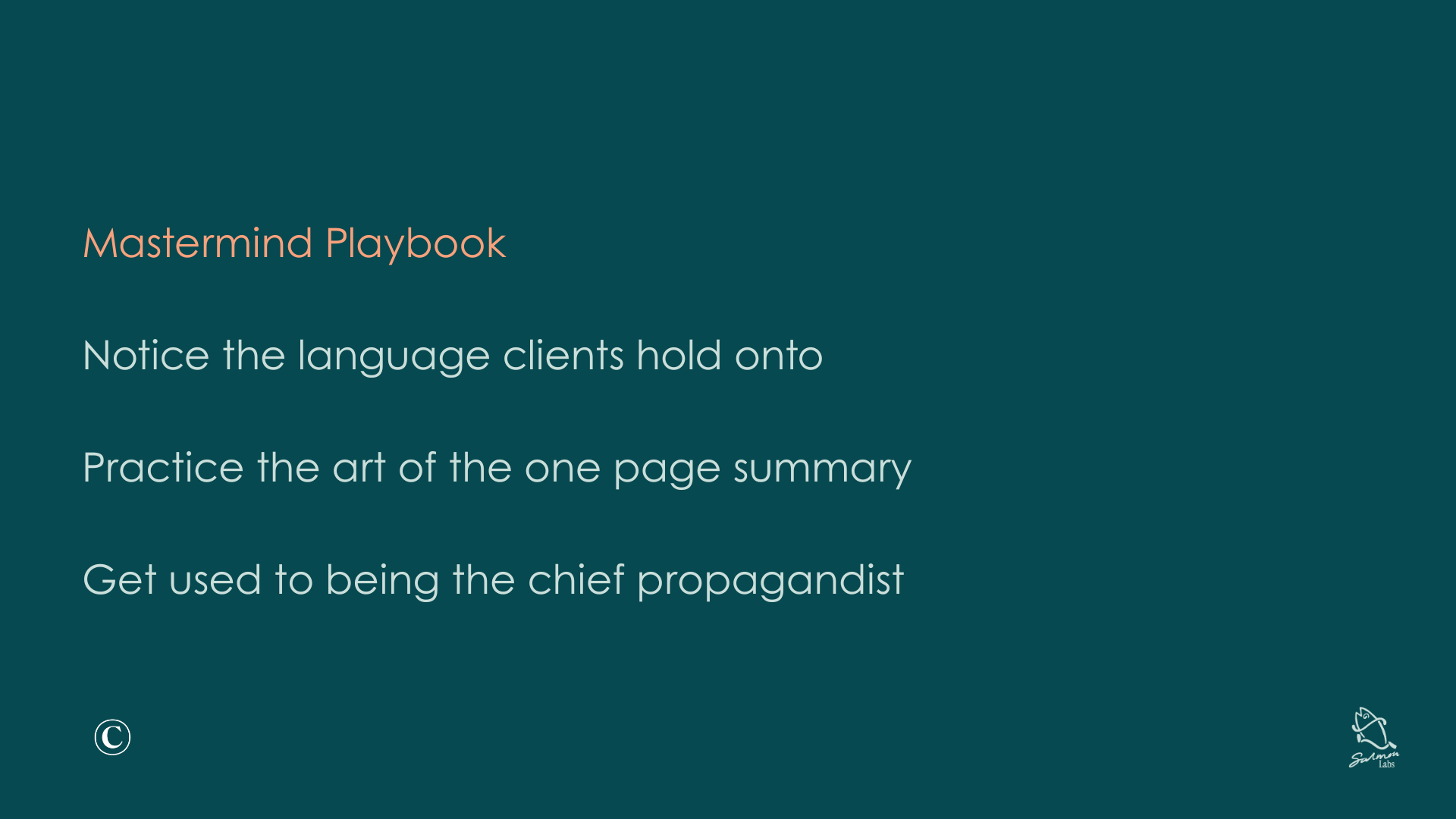
In simple terms, you can be a MC (strategic facilitator), Masher-Upper (riffing bud), Militant (principles enforcer) or Mastermind (narrative enforcer). None of these is better than the others, they’re just useful in different environments. Your wording to describe these may vary, but they feel directionally correct.
When strategists should own the problem
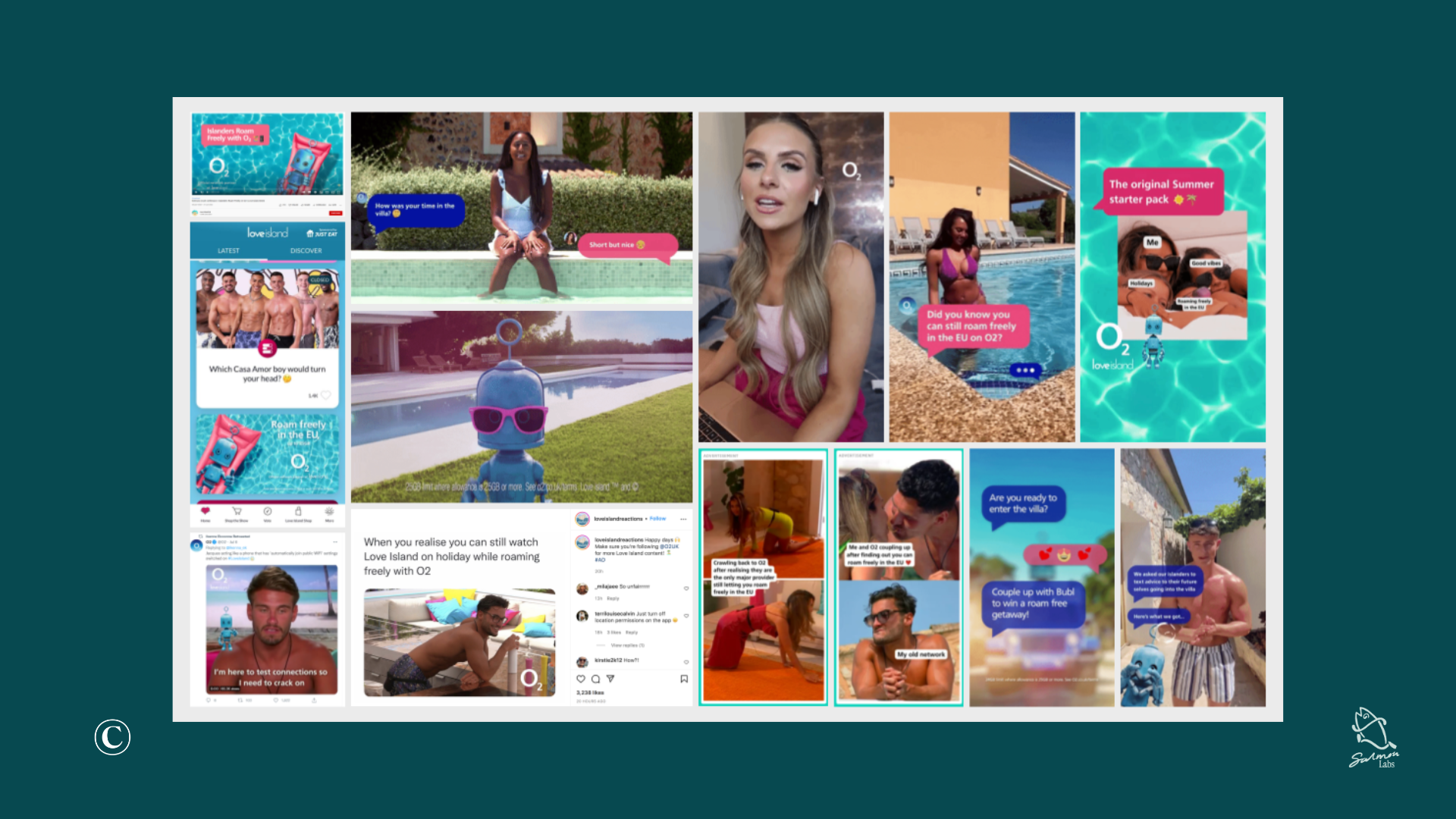
These are all useful depending on the context, casting and nature of the project at hand. I’ve played the role of MC when, at VCCP, I helped O2 pin down their role as Love Island sponsor both in 2022 and 2023. We gathered everyone in a workshop environment, senior clients included, and just bashed out what our role should be and what that means for how we show up, based on a clear articulation of the problem beforehand.
In both years we got commended by ITV for how involved we were with the show’s culture, and got the brand, business and campaign results to back it up.
When strategists should own the energy
In other projects though, you need to be more of a riffing buddy, and I find this to be especially true when you’re briefing a specialist-type campaign to a non-specialist team. When I worked on Cadbury, also with VCCP, we spent quite a lot of time trying to codify how the brand should show up through their Personalisation@Scale programme. And part of that meant helping everyone, creatives and the wider team, get their head around two facts:
We were not going to develop one ad for all audiences, but a variety of ads for mutually exclusive audiences identified through interest areas
We were going to develop this for digital and social channels not by treating them as a lite version of TV, but as a better version of OOH
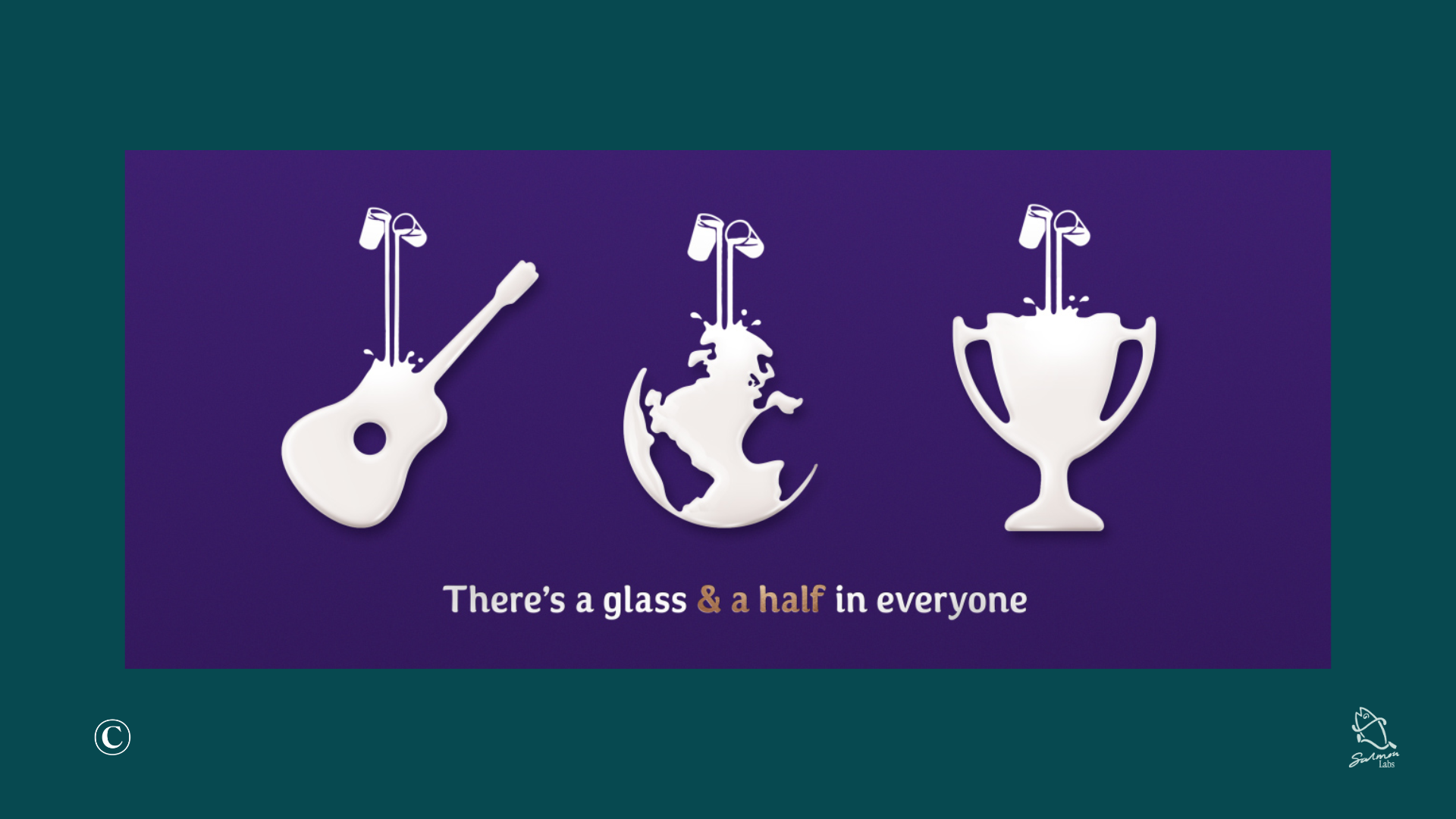
And so, a few failed briefing attempts (which were largely my fault) and lots of hand drawing to make a point and trial and error later, we got to a simple yet effective route that allowed the brand to express generosity through icons. And I have to say, after I left the agency, the output only got even better as far as making the glass & a half icon even more distinct. So kudos to the team on that.
When strategists should own the principles / narrative
Some other times, perhaps where most of the “what strategy really does” stereotypes live, you need to play the role of militant or mastermind. The role of militant is when you enforce the rules that are determined for that brand and its communications, which was what I had to do when I worked with Chase at Droga5. A lot of stuff was already codified, the job was to make the work both interesting and buyable within those confines.
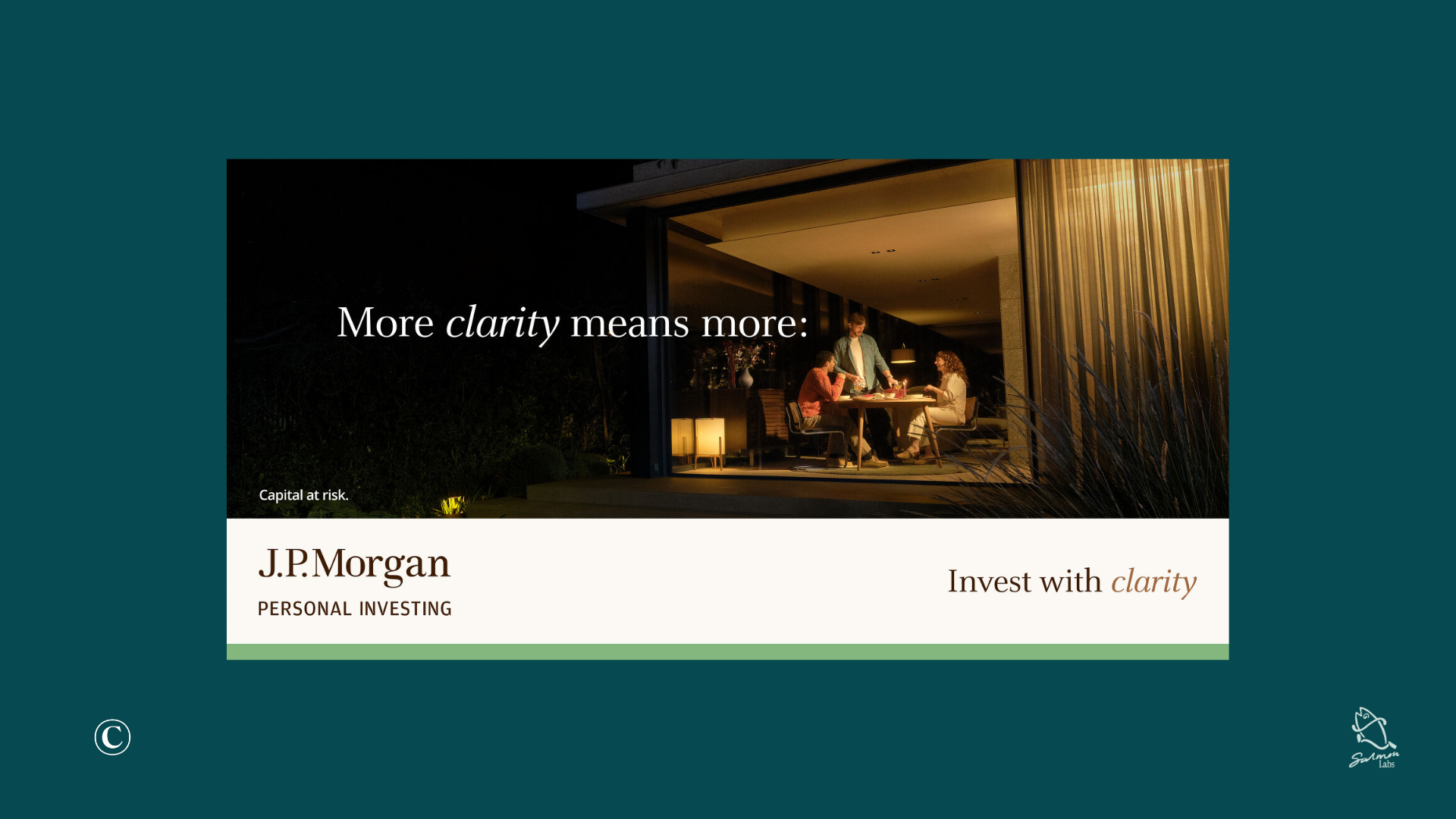
Alternatively, when I worked with J.P. Morgan at Droga5 as well, the job was much more based on first principles. We needed to codify with clients everything from the start, from the positioning, naming, visual identity, platform and advertising, and ensure other agencies could play within that.
When playing either role, you learn that there’s a lot of work that goes into ensuring you have a tight enough brief, but not too tight, to finally land at a simple message delivered through a distinct visual device you can keep writing to. Below is an example of the type of work J.P. Morgan ended up making, and while I left the agency before it went live, but I have little doubt it will do well.
We need to think in terms of strategy archetypes
To wrap up what is already a long spiel, the point is that we’ve spent the better part of a couple of decades thinking that there is a perfect way to do strategy, only for the macro world and our clients’ own realities to give us a dose of humble pie and go, “well, maybe boss, but probably not so suit yourself”.
Every time I speak to clients these days, the more valuable contributions I can give is to help them and myself understand how to best add value, and then execute the shit out of that. There’s no “I only work this way” because different organisations work in different ways, and it’s still possible to be adaptable and command a premium while you do so. I hope that will continue for a while!
So it’s not an idealistic view, but rather a deeply pragmatic one, which for better and for worse is what a lot of complex problems need if they are to be solved. Also means clients have a marginally better time solving them with you, instead of getting ‘the right answer’ and feeling their soul and morale get sucked out of the room with every interaction. I’d rather be nice to work with, but then again I’m deep down a people pleaser, so your mileage will vary. This is also, incidentally, how we can maximise the value we bring working in highly complex categories.
Join our strategy collective, and meet the others
If you enjoyed this post and want to meet more people who are trying to work this stuff out in real time, you should join the Salmon Crew. It’s a private strategy collective where I debate this sort of stuff with 300+ strategists from all over the world, organise private events, curate a swipe file, and ensure people have an opportunity to do stuff together that they couldn’t do alone. Because the best way to win in this 2020s shit show might be to swim together.
Written by Rob Estreitinho, a comms and social strategy consultant and the founder of Salmon Labs. You might also enjoy getting my newsletter. 6,000 readers at a 60% open rate, read by agency and in-house strategy leaders from all five continents. Subscribe below.